
How to add texture to textiles
- louisegoulttextiles
- Sep 5, 2025
- 4 min read
There are so many ways to add texture to textile artwork and embroidery, as can be be seen in the video above. How to add texture to textiles so it looks a cohesive part of the textile artwork rather than just an add on can be difficult to achieve.
This blog post will take you through some of the ways to add texture to textile work as well as how to add this cohesively.

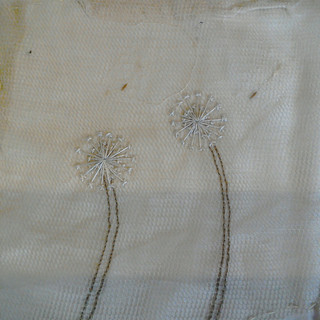
Hand embroidery is an excellent way to add texture to textile artwork, there's so many stitches to choose from. When adding texture through hand embroidery consider what is the outcome you would like. For more texture, perhaps for flowers or landscape embroidery, then a more raised stitch such as the French knot or picot stitch will be ideal. For a less textured effect, maybe for a more background area, then a stitch that sits closer to the fabric is perfect, for example the seed stitch or stem stitch.
Choosing different threads will also add to the texture; a Perle thread holds the shape of the stitch and is more prominent than a stranded cotton. You could also couch textured threads on to your textile work adding even more texture.

Using elastic thread is an exciting and interesting way to add texture to textile work. This example was created using a sewing machine with elastic thread in the bobbin and a normal thread as the top thread. The result is a very ruched and tactile piece of fabric. The direction of the stitching alters the effect of the texture. You can also work this using hand stitching if preferred.
This elastic technique is excellent if you want a lot of texture, to bring the fabric in and make an almost sculptural effect with areas of the fabric raised and dipped.

Using textured fabrics within your textile work is a good way to add texture more subtly. Here sari strips are used as the frayed edges add beautiful but delicate texture. The more texture you would like the more textured fabric you use. For a more refined or aged look use slightly worn textiles and incorporate frayed edges.

Layering fabrics and cutting away areas is a good way to introduce texture to textiles. You can layer more textured fabric behind other fabrics and cut areas back to reveal small amounts of texture. This is for when you want small areas of texture, to hint they may be more or to bring in a different colour to your work.
To further this idea you can use sandpaper to gentle distress the fabrics around the edges of the cut pieces. This will add fraying and a more worn look to your work. You can also just sand fabric without cutting which will create small worn areas and holes.

Using stuffing to create raised sections of fabric is one way to add a lot of texture. For this sample, small circles were stitched on the fabric using a running stitch. Before fastening the stitch off the thread was gathered and stuffing added inside the circle before completely closing the circle. The circles could be randomly spaced or placed evenly.
Using these techniques to create a cohesive piece of textile art can be tricky, to get the balance just right of having enough texture without too much or too little changes with each piece of work. When deciding to add texture to textiles consider these questions:
What am I trying to achieve with the texture?
Adding texture to artwork will work best if it has a purpose, to highlight an area or draw attention to it, to balance out the work with texture leading the eye across the work or to make it tactile for sensory reasons. You may want to make an area look aged or more delicate in which case sandpaper or frayed edges are ideal. For more prominent texture use stuffing or prominent embroidery.
What is the overall style of the artwork?
If the overall style of the artwork is minimalist then adding a lot of bright, bold texture won't look cohesive. Likewise if the style is bright and bold adding a little texture won't be right either.
Where is the foreground and background of the work?
Generally the foreground of a piece of work is more prominent, this is the area people would see more and therefore the majority of texture should be here. The background is further away and so less texture would be seen here.
What do I like doing?
For me, to really create my best work I have to be invested in it, to want to do it and to feel like I will enjoy creating it. Therefore I choose those techniques I enjoy working with. Adding texture is no different.
I hope that's helped answer some questions and inspired you to have a go at adding texture to textiles. I often hold workshops covering this technique which you can find out about here or contact me for more information about group workshops.


Louise, this is a wonderful exploration of how texture transforms textile work. The way you break down techniques—from hand embroidery and elastic thread to layering and stuffing—shows a deep understanding of how fabric can be shaped and brought to life.
From our side of the industry, we see texture as the beautiful result of both artistry and precision. Every raised stitch, every ruched surface, every frayed edge depends on a foundation that is perfectly prepared. Before a single texture is added, the warp beams feeding those fabrics must be wound with absolute consistency—thousands of ends aligned under controlled tension—so that the fabric itself has the stability to hold the texture a designer envisions.
It’s a reminder that great textile work…